LED Strip Installation Mistakes That Cost Thousands: A Contractor's Guide
Avoid the 7 most expensive LED strip installation failures in commercial projects. From adhesive failures and voltage drop to solder joint problems and thermal management — a complete contractor's prevention guide.

LED Strip Installation Mistakes That Cost Thousands: A Contractor's Guide
LED strip installations look simple. Peel the adhesive backing, stick the strip to a surface, connect power, and you are done. That is exactly what makes them dangerous for commercial projects — the apparent simplicity masks dozens of failure points that, at scale, turn a $10,000 installation into a $25,000 callback nightmare.
After years of documenting commercial LED strip failures across retail, hospitality, and architectural projects, the same mistakes appear repeatedly. Every one of them is preventable — if you know what to look for before the first strip goes up.

Mistake #1: Relying on Adhesive Backing Alone
The 3M VHB tape on the back of LED strips is excellent adhesive — for clean, temperature-controlled, indoor surfaces. In commercial environments, it fails routinely because:
- - Surface preparation is skipped. Dust, oil, silicone residue, and even fingerprints prevent proper bonding. The [3M VHB Technical Data Sheet](https://www.3m.com/3M/en_US/vhb-tapes-us/) specifies IPA (isopropyl alcohol) cleaning and 72-hour cure time for maximum bond strength — requirements almost never met on job sites
- - Thermal cycling breaks the bond. LED strips generate heat. In enclosed channels or near heat sources, repeated thermal expansion and contraction gradually peels adhesive from the mounting surface
- - Vertical and inverted mounting fails. Adhesive-only mounting on walls and ceilings is unreliable beyond 6 months for strips heavier than 12g/m
The Fix
Always use aluminum mounting channels for commercial installations. Channels provide: - Mechanical retention independent of adhesive - Heat sinking that extends LED lifespan by 30-50% (per [ENERGY STAR® thermal management guidelines](https://www.energystar.gov/products/lighting_fans)) - Clean, professional finish with diffuser covers - Easy strip replacement without surface damage
For budget-constrained projects, mounting clips every 12 inches provide adequate mechanical retention at minimal cost. But for any installation expected to last 3+ years in a commercial environment, aluminum profiles are non-negotiable.
Mistake #2: Ignoring Voltage Drop on Long Runs
This is the most technically damaging mistake in commercial LED strip installation, and it is epidemic. Voltage drop causes the LEDs at the far end of a strip run to receive less voltage than those near the power supply, resulting in:
- - Visible brightness falloff (dimmer at the end)
- - Color temperature shift (warm end appears warmer, cool end appears cooler)
- - Uneven dimming response
- - Premature LED failure at the underpowered end
The Physics
LED strips are essentially long resistive loads. According to Ohm's law, voltage drops proportionally with distance and inversely with conductor cross-section. Most LED strips use 0.5-1.0oz copper traces — thin enough that significant voltage drop occurs on runs exceeding 5 meters (16 feet) for 12V strips or 10 meters for 24V strips.
The Numbers
| Strip Voltage | Max Recommended Run | Voltage Drop at Max Run | |---|---|---| | 12V DC | 5m (16 ft) | 0.8-1.2V (7-10%) | | 24V DC | 10m (33 ft) | 0.8-1.2V (3-5%) | | 48V DC | 20m (66 ft) | 0.8-1.2V (2-3%) |
The [Illuminating Engineering Society (IES)](https://www.ies.org/) recommends maximum 3% voltage drop for uniform illumination in commercial applications.
The Fix
- Use 24V or 48V strips for all commercial work. The era of 12V strips in professional installations is over. Higher voltage means proportionally less current, less voltage drop, and longer achievable runs
- Power from both ends on runs exceeding recommended maximums. This halves the effective run length
- Use parallel power injection every 5 meters on long continuous runs. Run 18AWG or heavier wire alongside the strip and tap into the strip's power rails at regular intervals
- Measure actual voltage at the far end of every run during commissioning. If drop exceeds 3%, add injection points

Mistake #3: Undersizing Power Supplies
Commercial LED strip projects fail electrically when contractors size power supplies to match the strip's rated wattage exactly. A 100W strip run does not need a 100W power supply — it needs a 130-150W supply. Here is why:
- - LED strip wattage ratings are nominal. Actual consumption varies ±10% based on LED binning and forward voltage
- - Power supplies derate with temperature. A 100W supply rated at 25°C may only deliver 80W at 40°C — a common temperature inside enclosed ceilings
- - Inrush current on power-up can exceed steady-state draw by 5-10x for the first 20-50ms, tripping undersized supplies
The Rule
Size power supplies to 70-80% of rated capacity. A 100W LED strip load requires a 125-143W power supply. For outdoor or high-temperature installations, derate further to 60-70%.
The [UL 8750 standard](https://www.ul.com/) for LED equipment requires power supplies to operate within their rated conditions — running at 100% capacity continuously is technically within spec but dramatically shortens supply lifespan.
Mistake #4: Cutting Strips in the Wrong Location
Every LED strip has designated cut points — typically marked with a scissors icon or copper solder pads. Cutting between these points destroys the LED segment containing the cut, creating a dead section.
This sounds obvious, but in commercial installations with hundreds of cuts across dozens of runs, errors compound:
- - Cuts made in dim lighting without magnification miss the cut marks
- - Curved installations stretch the strip, making cut marks harder to identify
- - Waterproof (IP65/IP67) strips have silicone or epoxy coatings that obscure cut marks entirely
The Fix
- Always cut under adequate lighting with the strip powered off and flat on a work surface
- Use sharp scissors or a rotary cutter — never a utility knife, which can nick adjacent copper traces
- For IP65+ strips, score the silicone coating lightly first to reveal cut marks underneath
- Mark cuts with tape or pen before cutting, and verify against the strip's datasheet segment length
Mistake #5: Poor Solder Joints and Connector Failures
The weakest link in any LED strip installation is the connection point — whether soldered or using mechanical connectors. In commercial environments, connection failures account for the majority of service calls.
Solder Joint Failures
Common causes: - **Cold solder joints** from insufficient iron temperature or contact time - **Pad lifting** from excessive heat or mechanical stress on the fragile copper pads - **Flux residue corrosion** when water-soluble flux is not cleaned after soldering
The fix: Use a temperature-controlled soldering iron at 350°C (662°F). Apply the iron for no more than 3 seconds per pad. Use rosin-core solder (not acid-core). Apply strain relief (heat-shrink or hot glue) to every solder joint.
Mechanical Connector Failures
Snap-on and push-in connectors are convenient but problematic at scale: - **Contact resistance** is higher than solder, creating hot spots - **Vibration and thermal cycling** loosen mechanical connections over time - **Corrosion** at contact points in non-climate-controlled environments
For commercial installations, the [National Electrical Manufacturers Association (NEMA)](https://www.nema.org/) recommends soldered connections with strain relief for all permanent LED strip installations. Mechanical connectors are acceptable only for temporary installations or easily accessible service points.
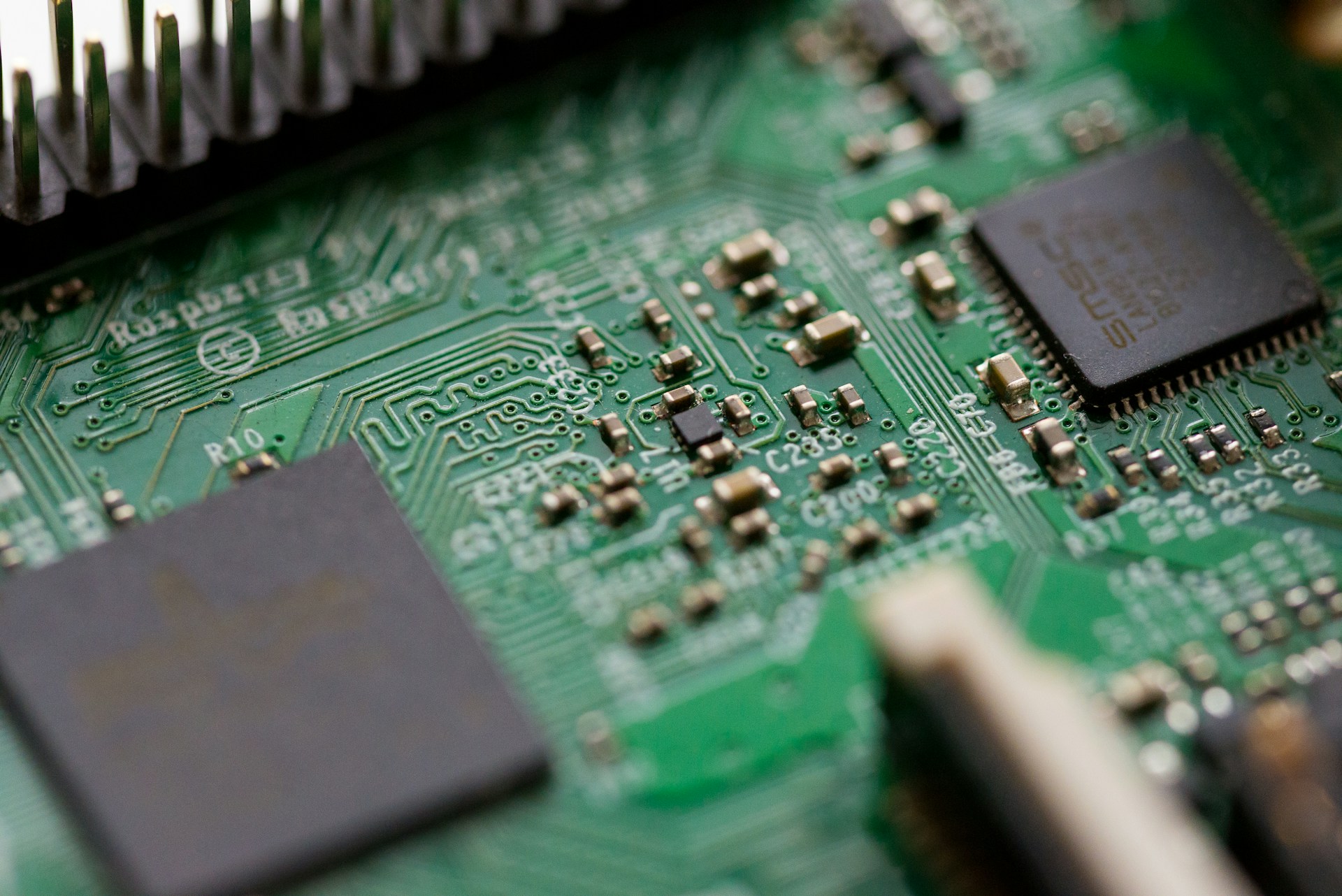
Mistake #6: Inadequate Thermal Management
LED strips generate heat — typically 2-5 watts per foot for commercial-grade strips. In open air, this heat dissipates naturally. In enclosed installations (inside coves, behind walls, in sealed channels), heat builds up and:
- - Reduces LED lifespan. Every 10°C increase above rated junction temperature reduces LED life by approximately 50%, according to the [DOE Solid-State Lighting factsheet](https://www.energy.gov/eere/ssl/solid-state-lighting)
- - Causes color shift. Overheated LEDs shift toward blue/cool, creating visible color inconsistency
- - Degrades adhesive. The 3M VHB backing on most strips is rated to 90°C — easily exceeded in sealed enclosures
The Rule
For any installation drawing more than 10W per meter: - Aluminum mounting channels are mandatory, not optional - Ensure minimum 25mm air gap between the channel and any enclosing surface - Never run strips at 100% brightness in sealed spaces — dim to 80% maximum
Mistake #7: Mixing LED Strip Batches Without Color Matching
LED manufacturing produces chips with slight variations in color temperature and brightness — referred to as "binning." Two strips from the same product line but different production batches can show visible color differences when mounted side by side.
In residential installations, this is rarely noticeable. In commercial environments — especially retail, hospitality, and gallery lighting — even a 100K color temperature difference is visible and unacceptable.
The Fix
- Order all strips for a project from a single production batch. Request batch/lot matching from your supplier
- Order 15-20% overage to ensure replacement strips match the original batch
- Test strips side by side before installation — compare powered samples from every reel
- Document batch numbers and store them with project records for future maintenance
For projects comparing strip types, see our guide on [COB LED strips vs SMD for commercial use](/blog/cob-led-strips-vs-smd-2835-commercial) and our [LED strip buying guide](/blog/led-strip-lights-buying-guide-2025).
Cost of Getting It Wrong
A single commercial LED strip callback typically costs:
| Issue | Typical Repair Cost | |---|---| | Adhesive failure (re-mount 50m) | $800-$1,500 | | Voltage drop correction (add injection) | $500-$1,200 | | Power supply replacement | $200-$600 | | Solder joint repair (access required) | $300-$800 per joint | | Full strip replacement (color mismatch) | $2,000-$5,000 | | **Total typical callback** | **$1,500-$4,000** |
Multiply by 3-5 callbacks over a poorly installed project's first year, and the "savings" from cutting corners evaporate entirely.