LED Lighting for Sports Venues: Specs, Standards, and What Contractors Need to Know
Sports venue LED lighting demands extreme uniformity, broadcast-quality flicker performance, and decades of outdoor durability. This guide covers IES RP-6, FIFA standards, critical specs (TLA, CRI, CCT), modular design trends, and procurement considerations.

LED Lighting for Sports Venues: Specs, Standards, and What Contractors Need to Know
Sports venue lighting is one of the most demanding applications in the LED industry. The requirements go far beyond putting bright lights on tall poles. You need uniform illuminance across a playing surface that can span 7,000+ square meters. You need color rendering accurate enough for HD broadcast cameras capturing action at 120 frames per second. You need instant restrike capability for dramatic in-game lighting effects. And you need all of this to survive decades of outdoor weather, vibration, and thermal cycling.
If you are a contractor, specifier, or facility manager evaluating LED lighting for sports venues in 2026, this guide covers the specifications, standards, and practical considerations that determine whether a project succeeds or becomes a warranty nightmare.
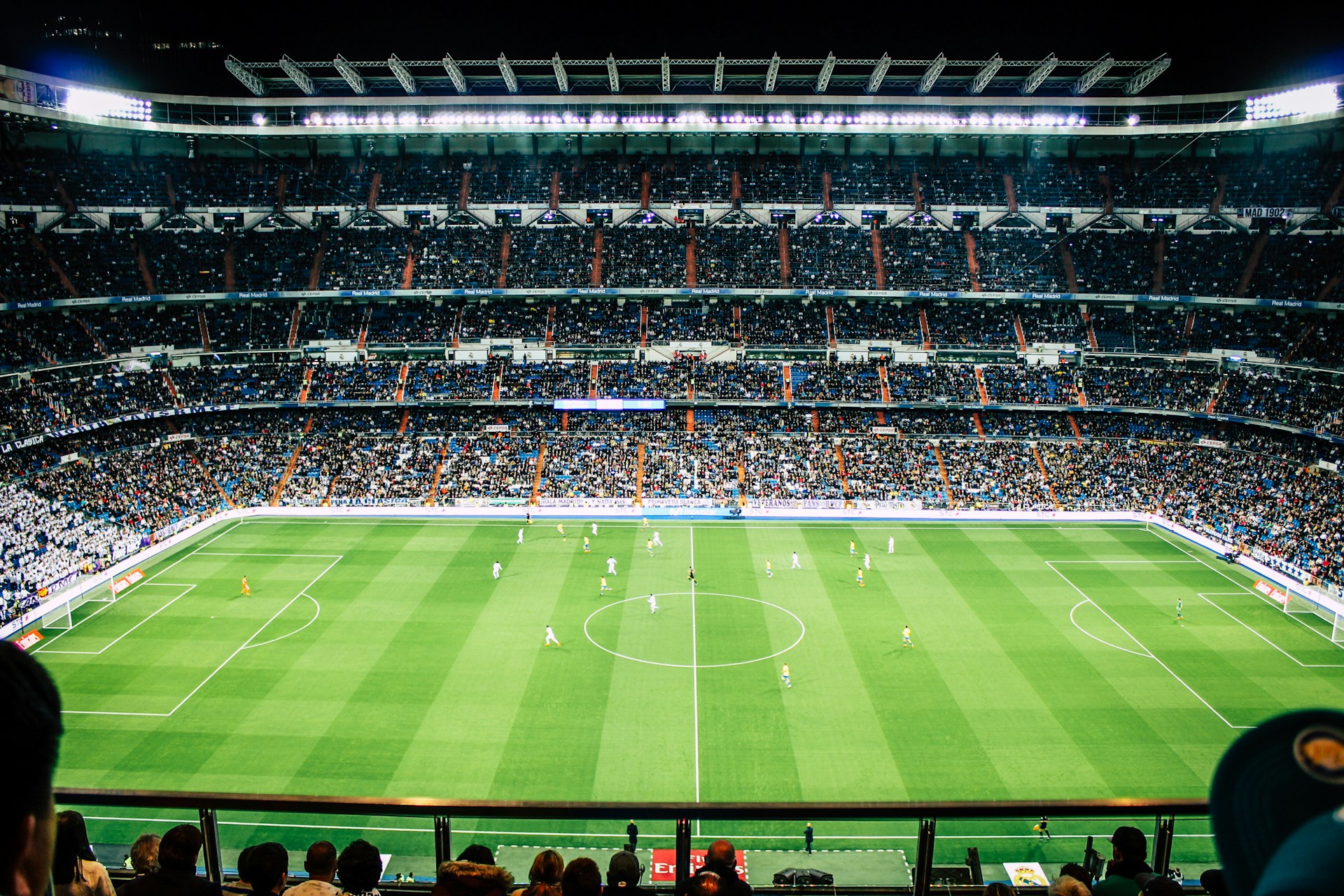
The Standards You Must Know
Sports venue lighting is governed by overlapping international and regional standards. Failing to meet these specifications can result in failed inspections, broadcast rejection, and liability exposure.
IES RP-6: American Standard for Sports Lighting
The Illuminating Engineering Society's RP-6 (Sports and Recreational Area Lighting) is the primary standard in North America. It classifies sports lighting into four classes based on the level of competition:
| Class | Application | Horizontal Illuminance | Uniformity (Min/Avg) | |---|---|---|---| | I | Major league / TV broadcast | 1,500-2,500+ lux | 0.70+ | | II | University / semi-pro | 750-1,500 lux | 0.60+ | | III | High school / municipal | 300-750 lux | 0.50+ | | IV | Recreational / practice | 200-300 lux | 0.40+ |
These values are for horizontal illuminance measured at the playing surface. For broadcast venues, vertical illuminance requirements are equally critical — cameras need light on the players' faces and bodies, not just on the ground.
FIFA, UEFA, and League-Specific Requirements
International sports federations publish their own lighting requirements that often exceed IES standards:
FIFA Quality Programme for Football Lighting: - Category A (international matches, HD broadcast): 2,400 lux horizontal, 1,800 lux vertical, uniformity ≥ 0.70 - Category B (national matches): 1,200 lux horizontal, 900 lux vertical, uniformity ≥ 0.60
UEFA Champions League: - 2,400 lux horizontal, 1,800 lux vertical minimum - Color temperature: 5,000-6,000K - CRI ≥ 80 (Ra8), with R9 ≥ 20 for accurate red rendering on broadcast
NFL / NBA / MLB each publish venue-specific requirements that generally align with IES Class I but add flicker requirements for slow-motion replay cameras.
EN 12193: European Standard
The European standard EN 12193 (Light and Lighting – Sports Lighting) uses a similar tiered classification system. For contractors working on European or international projects, EN 12193 compliance is typically required alongside FIFA/UEFA specifications.
Critical LED Specifications for Sports Venues
1. Flicker Performance (TLA and SVM)
This is where LED sports lighting gets technically complex. High-speed broadcast cameras (120-240 fps for slow-motion replay) are far more sensitive to flicker than the human eye. What looks perfectly steady to a spectator can produce visible banding, strobing, or color shifting on camera.
The relevant metrics: - **Temporal Light Artifact (TLA):** Measured as Percent Flicker and Flicker Index at the camera's frame rate - **Stroboscopic Visibility Measure (SVM):** Quantifies the perception of stroboscopic effects under LED illumination (IEC TR 61547-1)
For broadcast-quality venues, require: - Percent flicker < 3% at all dimming levels - Flicker Index < 0.02 - No visible banding at 120 fps (have your supplier demonstrate on camera)
Flicker performance is primarily a function of the LED driver. High-frequency, constant-current drivers (operating above 1,200 Hz) effectively eliminate visible flicker. Cheaper drivers operating at mains frequency (50/60 Hz or 100/120 Hz) will fail broadcast requirements.
2. Color Rendering (CRI and TM-30)
The [U.S. Department of Energy](https://www.energy.gov/eere/ssl/solid-state-lighting) has promoted TM-30 as a more comprehensive color rendering metric than CRI alone. For sports venues, both matter:
- - CRI (Ra) ≥ 80 is the minimum for most venues
- - R9 ≥ 20 is critical — R9 measures red rendering, which affects how team uniforms, skin tones, and field markings appear on camera
- - TM-30 Rf ≥ 80, Rg 97-103 provides better assurance of natural, accurate color across all hues
Request TM-30 data from your fixture supplier, not just CRI. Two fixtures can both claim CRI 80 and look dramatically different on camera.
3. Color Temperature and Consistency
Sports venue fixtures must maintain consistent color temperature (CCT) across every fixture in the installation: - **Target CCT: 5,000-5,700K** for most broadcast venues - **CCT tolerance: ≤ 200K** across all fixtures (tighter is better; ±100K is ideal) - **MacAdam ellipse: ≤ 3-step** for imperceptible color variation between fixtures
This is where cheap LED fixtures fail. A ±500K spread across 200 fixtures creates visible warm/cool patches on the field that look terrible on broadcast. Specify tight binning requirements and verify with on-site commissioning measurements.
4. Thermal Management
Sports venue fixtures endure extreme thermal conditions: direct sun exposure on hot days, freezing temperatures at night, and high ambient temperatures from their own output. LED junction temperature directly affects: - Lumen maintenance (how quickly the fixture dims over its life) - Color shift (CCT can drift 200-400K as LEDs degrade) - Driver reliability (drivers are the #1 failure point in outdoor LED fixtures)
Require from your supplier: - L80 rating ≥ 50,000 hours at maximum ambient temperature (typically 40-50°C) - Independent thermal test data, not just chip-level projections - Passive cooling preferred (no fans to fail and clog)
5. Optical Control and Spill Light
Sports lighting must deliver high illuminance on the field while minimizing spill light beyond the venue boundaries. This is increasingly important as communities push back against light pollution and municipalities adopt dark-sky ordinances.
Modern LED sports fixtures use precision-molded optics or adjustable reflectors to achieve: - **Beam angles of 10-60°** (depending on mounting height and throw distance) - **Sharp cutoff** to minimize uplight and backlight - **Compliance with IDA/IES Model Lighting Ordinance** where required
The optical advantage of LED over legacy HID is significant: LED fixtures can direct 85-95% of their output onto the playing surface, compared to 60-75% for HID fixtures that waste light in all directions. This translates directly to fewer fixtures and lower connected load for the same illuminance. For a broader context on how LED technology has evolved, see our guide on [COB LED strips vs SMD for commercial applications](/blog/cob-led-strips-vs-smd-2835-commercial).
Modular Design: The 2026 Industry Direction
At Light + Building 2026 in Frankfurt, Ledture (Netherlands) showcased marine-grade modular LED fixtures specifically designed for sports venues and transport infrastructure. Their approach represents the emerging industry direction:
- - Individual LED modules are field-replaceable without removing the fixture from the pole
- - Each module carries its own performance data (lumens, CCT, CRI, hours) on an embedded tag for traceability
- - Marine-grade construction (IP66/IP67, IK10 impact rating) for extreme durability
- - Designed for 20+ year service life with component-level maintenance
This modular approach is significant for sports venues because: 1. **Fixture locations are typically 15-40 meters above ground** — minimizing the need to bring a crane for maintenance saves $5,000-$15,000 per service visit 2. **Individual module replacement** maintains uniform color and output across the array 3. **Technology upgrades** become possible without full fixture replacement — swap modules to get higher efficacy or improved color rendering
Installation Considerations for Contractors
Structural Loading
LED sports fixtures are generally 40-60% lighter than equivalent HID fixtures, which is significant for pole loading calculations. However, LED fixtures often present a larger wind-load profile (wider, flatter housings vs. compact HID reflectors). Verify both weight and wind load with structural calculations.
Aiming and Commissioning
Precise aiming is critical for uniformity. Each fixture must be aimed to within ±0.5° of the photometric design. This requires: - Computer-generated aiming diagrams from the fixture manufacturer - Laser or digital inclinometer for field aiming - Post-installation illuminance measurements at grid points across the playing surface - Re-measurement after 100 hours of operation (initial LED lumen stabilization)
Electrical Infrastructure
LED sports lighting systems draw significantly less current than HID, but the power factor and harmonic content of LED drivers can affect electrical infrastructure: - Require power factor ≥ 0.95 at full load - Require THD ≤ 20% per IEC 61000-3-2 - Plan for surge protection (10kV/10kA minimum for outdoor installations)
Control Systems
Modern sports venues expect: - **Instant on/off** (no warm-up period — a major advantage over HID) - **Programmable scenes** (pre-game, in-game, halftime show, post-game, TV timeout) - **DMX512 or DALI-2 control** for individual fixture addressing and smooth dimming - **Emergency lighting modes** with battery backup for safe evacuation
For more on control system selection, our [LED strip installation mistakes guide](/blog/led-strip-installation-mistakes-commercial) covers common commercial control pitfalls that apply to venue-scale projects.
Cost Considerations for Bulk Procurement
A typical outdoor sports venue (football/soccer) requires 120-240 LED fixtures across 4-8 poles. At wholesale prices:
| Component | Typical Cost Range | |---|---| | LED fixture (1,000-2,000W class) | $2,500-$8,000 each | | Poles and foundations | $15,000-$50,000 each | | Electrical infrastructure | $100,000-$300,000 | | Controls and commissioning | $50,000-$150,000 | | **Total project** | **$500,000-$2,500,000** |
ROI is driven by: - **Energy savings:** 50-70% reduction vs. HID (1,500W LED replacing 3,000W HID) - **Maintenance savings:** LED = 50,000+ hours vs. HID = 6,000-12,000 hours lamp life - **Rebates:** DLC-listed sports lighting qualifies for utility incentives. See our comprehensive [rebates guide](/blog/commercial-led-lighting-rebates-incentives-2026) for current program details - **Revenue generation:** Superior broadcast lighting quality can attract higher-tier events