High Bay LED vs Panel Lights for Commercial Spaces
High bay LED vs panel lights is not a style choice. Ceiling height, lumen package, beam angle, mounting method, controls, and maintenance access decide the right fixture.

High Bay LED vs Panel Lights: The Short Answer
High bay LED lights are built for tall, open commercial spaces where the fixture has to push a lot of light from a high mounting point to the floor. LED panel lights are built for lower ceilings, office grids, classrooms, retail areas, clinics, corridors, and other spaces where broad, comfortable, low-glare light matters more than long throw.
The dividing line is usually ceiling height. Once the mounting height moves above roughly 15-20 feet, high bays start to make more sense. Below that, panels, troffers, linear fixtures, or low bays are usually easier to control and more comfortable for occupants. But height is only the first filter. Buyers also need to compare lumens, beam angle, glare, controls, emergency requirements, mounting hardware, cleaning access, and replacement stock.
The [U.S. Department of Energy](https://www.energy.gov/energysaver/led-lighting) notes that LED lighting uses far less energy and lasts much longer than incandescent lighting. [ENERGY STAR](https://www.energystar.gov/products/lighting_fans/light_bulbs/learn_about_led_bulbs) also reminds buyers to compare brightness in lumens rather than watts. For commercial projects, IEEE guidance matters too: [IEEE 1789](https://standards.ieee.org/ieee/1789/4481/) is often referenced when teams evaluate flicker risk from LED drivers and dimming systems.

Where High Bay LEDs Make Sense
High bay fixtures are designed for volume: warehouses, distribution centers, gyms, manufacturing floors, aircraft hangars, big-box retail, storage buildings, loading areas, and other spaces with high ceilings. The fixture may hang from a hook, pendant, chain, surface mount, or bracket. It may use a round UFO design, a linear body, or a more specialized optical system.
The reason high bays exist is simple. When light starts 20, 30, or 40 feet above the working plane, it has to travel farther and still land with enough intensity and uniformity. A flat panel designed for a 9-foot office ceiling is not made for that job. It may look bright at the lens, but it will not deliver the right light pattern across a warehouse aisle.
High bays also give buyers more control over distribution. Narrow beam angles can push light down from very high mounting points. Wider beam angles can cover open floors. Aisle optics can direct light along racking instead of wasting it on shelf faces or creating glare for forklift operators.
If your project involves warehouse aisles or industrial ceilings, compare this decision with our [LED high bay lights warehouse buyer checklist](/blog/led-high-bay-lights-warehouse-2026-buyer-checklist). It covers mounting height, lumen targets, aisle layouts, controls, and maintenance planning in more detail.
Where LED Panels Make Sense
LED panels are most useful in spaces where the ceiling is lower, the work is closer to the fixture, and visual comfort matters. Offices, schools, conference rooms, clinics, corridors, back-office areas, retail aisles, hospitality spaces, and clean commercial interiors are common examples.
Panels are usually installed in suspended ceiling grids, surface frames, or drywall kits. The familiar 2x2 and 2x4 formats make them easy to plan around existing fluorescent troffer layouts. They spread light broadly and can make a room feel clean, even, and modern when the product has good diffusion and glare control.
Panels are not only for offices. They can work in low-ceiling production areas, labs, training rooms, packing rooms, and commercial service spaces. The key is matching the fixture to the ceiling height and task. A low ceiling with a powerful high bay can feel harsh and uneven. A panel in that same space may deliver smoother light with less glare.
For projects that involve panels, troffers, or ceiling-grid retrofits, use our [commercial LED lighting guide for lumens, controls, rebates, and ROI](/blog/commercial-led-lighting-guide-lumens-controls-rebates-roi) before approving the fixture schedule.
Ceiling Height Is the First Decision
A practical rule of thumb:
- - Under 12 feet: panels, troffers, linear fixtures, downlights, or low-output commercial fixtures usually fit best
- - 12-18 feet: low bays, linear fixtures, or carefully selected high bays may work depending on the task
- - 18 feet and higher: high bay fixtures usually become the primary option
That rule is not a substitute for a lighting layout. It is a starting point. A 16-foot retail stockroom, a 16-foot gym, and a 16-foot factory cell can need different fixture types because the work, reflectance, obstacles, and occupant expectations are different.
Mounting height also affects glare. A high-output fixture mounted too low can create hot spots and visual discomfort. A broad panel mounted too high can feel dim at the floor. Buyers should ask for photometric files, a simple layout, and expected foot-candle levels before a bulk order.
Compare Lumens, Not Replacement Wattage
One of the most expensive mistakes is replacing old fixtures by wattage alone. A 400W metal halide high bay does not automatically convert to one specific LED wattage. A fluorescent troffer does not automatically convert to one specific panel wattage. Delivered lumens, fixture efficiency, distribution, dirt depreciation, ceiling height, and layout all matter.
ENERGY STAR's consumer guidance about lumens applies even more strongly in commercial buying. Watts tell you energy draw. Lumens tell you light output. For a facility, the better question is delivered light: how much usable light reaches the working area after optics, mounting height, spacing, and room surfaces are considered?
High bays often use larger lumen packages because the light has farther to travel. Panels usually use lower lumen packages because they are closer to the work plane and spread light broadly. Buying the highest-lumen option in every category is not smart procurement. It can create glare, waste energy, reduce rebate fit, and make occupants complain.
Ask suppliers for:
- Delivered lumens
- Lumens per watt
- Beam angle or distribution type
- Mounting height recommendation
- Spacing criteria
- Glare data where available
- Driver and dimming specifications
Beam Angle and Spacing Decide Uniformity
High bays are more sensitive to beam angle because the fixture is high above the floor. A narrow beam can be useful in tall spaces, but if fixtures are spaced too far apart, the floor may show bright circles and dark gaps. A wide beam can improve uniformity in open areas, but in aisles it can waste light on racking or shine into workers' eyes.
Panels usually have a broad distribution, but spacing still matters. Too few panels create dim zones. Too many panels create over-lighting and waste. Lens quality also matters because cheap panels can show uneven brightness, edge hot spots, or harsh glare.
For both fixture types, the correct layout depends on the actual space. Ceiling height, ceiling color, wall reflectance, rack height, furniture, machinery, floor color, daylight, and task type all change the result. A product spec sheet cannot replace a layout for a large order.
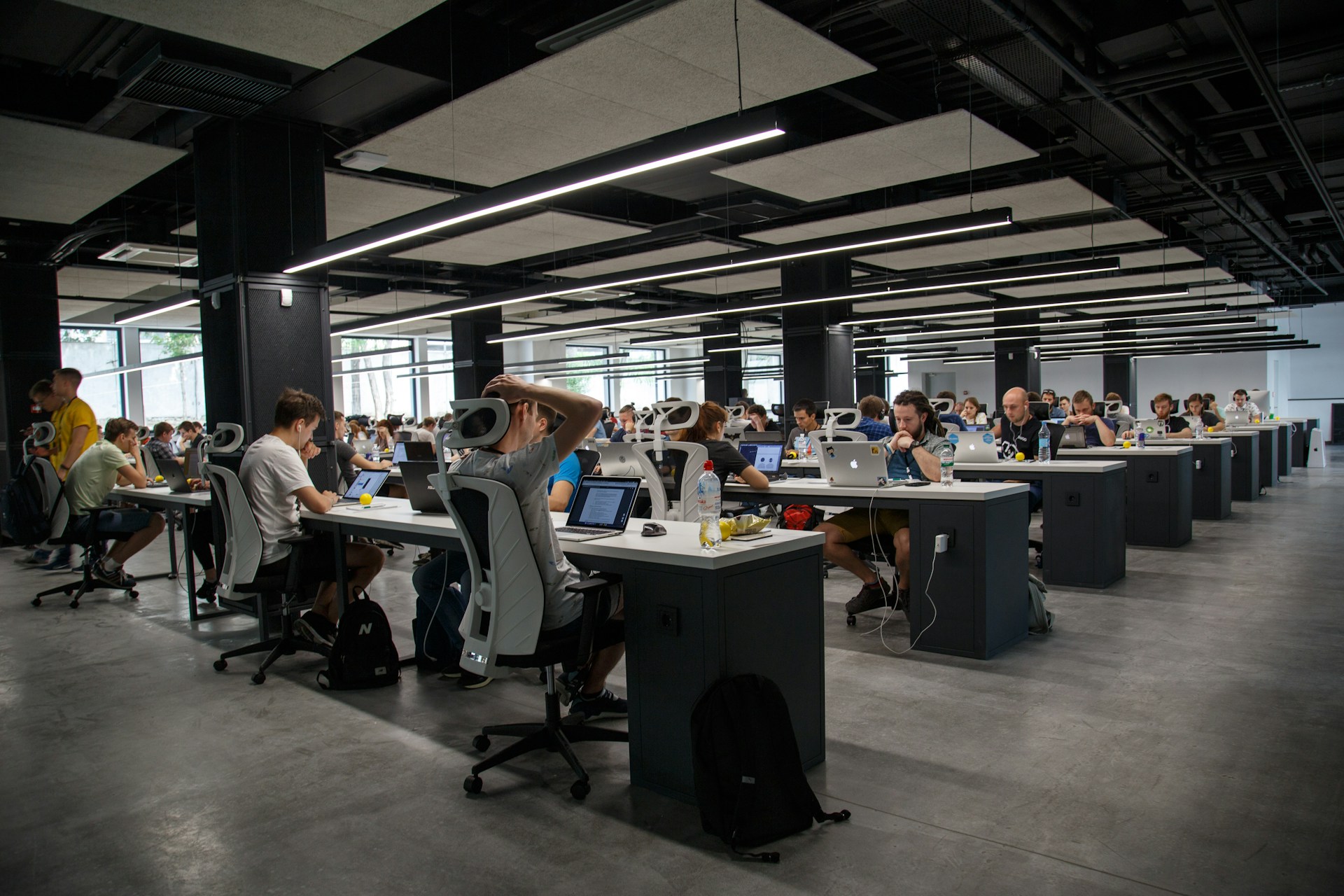
Controls Are Different for Each Fixture Type
Controls are often treated as an add-on, but they should be part of the fixture decision. High bay areas commonly benefit from occupancy sensors, daylight harvesting near skylights, aisle-based zoning, high-end trim, and networked schedules. Warehouses with inconsistent traffic can save a lot when lights dim or shut off in unused zones.
Panel projects often use room-based controls: wall stations, vacancy sensors, daylight response near windows, conference room scenes, and building automation schedules. In offices and schools, controls also affect comfort. Lights that dim smoothly and respond predictably get fewer complaints.
Driver compatibility is the detail that protects the project. Do not assume every dimmable high bay or panel works with every control. Confirm whether the driver supports 0-10V, DALI, phase dimming, Bluetooth mesh, networked controls, or another protocol. Ask for tested controls, wiring diagrams, commissioning requirements, and minimum dim levels.
IEEE 1789 is relevant because driver design and dimming behavior can affect flicker. Buyers do not need to become standards experts, but they should request flicker data or samples for classrooms, production areas, video spaces, inspection zones, and any area where flicker complaints would be expensive.
Installation and Maintenance Costs Can Flip the Decision
Fixture price is only one line item. High bays may need lifts, after-hours work, safety spotters, pendant kits, aircraft cable, sensor commissioning, surge protection, or aisle-specific aiming. Panels may need grid work, surface frames, emergency drivers, plenum-rated wiring, drywall kits, or disposal of old fluorescent fixtures and ballasts.
Maintenance access also matters. A high bay in a busy warehouse may require a lift and shutdown window every time it needs service. A panel in an office grid is easier to access, but if the driver is low quality or the fixture is a nonstandard size, replacement can still become frustrating.
For bulk orders, protect future maintenance:
- - Standardize fixture families where possible
- - Keep spare drivers, lenses, sensors, and mounting hardware
- - Document final CCT and wattage settings
- - Label control zones
- - Keep spec sheets and warranty terms with the facility records
- - Order a small spare percentage from the same approved product family
If the project may involve rebates, verify eligibility before ordering. Some utility programs require DLC or ENERGY STAR qualification, pre-approval, specific controls, invoices, photos, or commissioning paperwork.
FAQ
Which ceiling heights need high bay LED lighting?
High bays are usually the better choice above roughly 18-20 feet. Some spaces in the 12-18 foot range may use low bays or carefully selected high bays, but the decision should be verified with a lighting layout.
When are LED panels better than high bays?
Panels are better for lower ceilings, ceiling-grid spaces, offices, schools, clinics, corridors, and areas where even, comfortable, low-glare light is more important than long-distance throw.
Should buyers compare high bays and panels by wattage?
No. Compare delivered lumens, efficacy, beam angle, mounting height, spacing, glare, controls, warranty, and installation cost. Wattage only tells you energy draw.
Can high bays and panels use the same controls?
Sometimes, but not automatically. Confirm the driver protocol, sensor compatibility, dimming range, wiring diagram, and commissioning requirements before ordering either fixture type.
Do commercial LED projects need a lighting layout?
Yes for any meaningful bulk order. A lighting layout helps verify light levels, uniformity, fixture spacing, beam angle, and glare before products are purchased and installed.
Bottom Line
High bay LED vs panel lights is a building decision, not a catalog decision. Use high bays for tall, open spaces that need strong, controlled light from above. Use panels for lower ceilings and occupied commercial interiors that need broad, comfortable illumination. Then verify the choice with lumens, beam angle, spacing, controls, installation access, rebates, and maintenance planning before the bulk order is approved.